Between city life and a more rural way of living
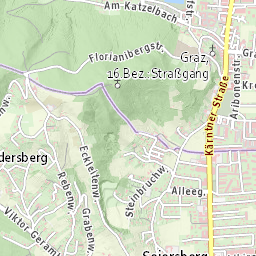
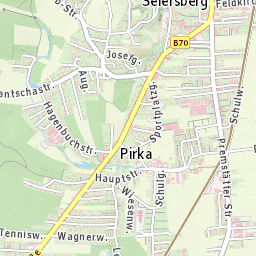
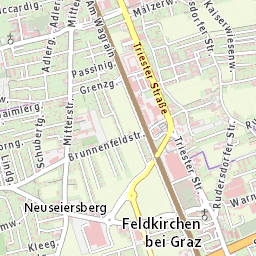
Seiersberg-Pirka lies directly southwest of Graz, combining easy access to the Styrian capital with the character of an established municipality. The municipality in its current form was created in 2015 through the merger of Seiersberg and Pirka. As a result, it brings together different types of neighbourhoods: more densely developed areas with plenty of shops and transport connections, as well as quieter residential districts with more green space and a rural feel.
The proximity to Graz shapes everyday life. Many residents commute to the city for work, education, culture and leisure. At the same time, Seiersberg-Pirka has developed a substantial range of its own amenities, allowing residents to take care of many everyday needs without travelling into Graz.
Convenient local amenities
On 1 January 2026, Seiersberg-Pirka had approximately 12,264 residents. Its population has grown by around 17% since 2011. About 15% of residents are under 15, while just under 19% are aged 65 or older.
Local amenities are well developed for a municipality of this size. Within two kilometres of the centre, there are six kindergartens, six schools, around twelve supermarkets and grocery stores, and numerous restaurants. Healthcare is also well represented, with 13 doctors' practices and three pharmacies recorded in the area.
Many everyday destinations are relatively close. The nearest public transport stop is only about 100 metres from the centre, while a kindergarten is around 450 metres away and the nearest supermarket approximately 550 metres. The closest primary school is about 800 metres away. This is particularly convenient for families and anyone who prefers to organise daily life within their immediate neighbourhood.
Excellent transport connections
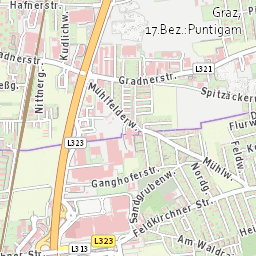
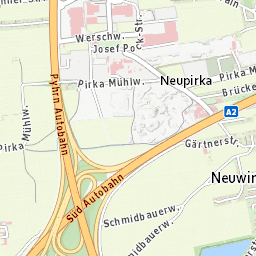
One of Seiersberg-Pirka's main advantages is its location within the regional transport network. The A9 motorway and the Graz West interchange are both approximately one kilometre from the centre. The B70 also runs directly through the municipality. This makes travelling towards Graz and other parts of Styria straightforward, although the main road naturally brings more traffic to the areas along its route.
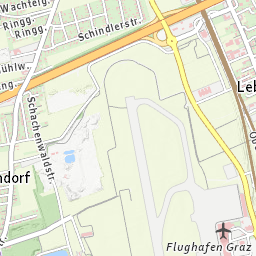
Graz Straßgang railway station is around two kilometres away. From the town centre, reaching Graz Central Station by public transport takes approximately 25 minutes, including one transfer. Travelling to Vienna takes around three hours and requires two transfers. Graz Airport is only about four kilometres away in a straight line, making it another convenient transport option.
Climate, noise and natural hazards
The climate is broadly similar to that of the surrounding Graz region. Between 2015 and 2024, the average annual temperature was around 10.7 °C, compared with 9.8 °C during the 1991–2020 reference period. The area experienced approximately 17 hot days per year on average.
According to the 2022 strategic noise maps, the town centre lies outside the mapped noise zones for major roads, railways, airports and industrial areas. However, these maps cover only major transport routes, so actual noise levels can vary considerably between individual streets. Another positive point is that the centre is outside the mapped HQ100 and HQ300 flood zones.
Seiersberg-Pirka is an attractive option for people who want to live close to Graz without giving up the amenities and identity of a municipality in its own right. Transport connections are excellent, while the specific neighbourhood will largely determine how quiet and green everyday life feels.